
From Parking Spot to Pantry: How an 18th Arrondissement Garage is Feeding Paris

Underground at La Caverne: Rethinking Urban Space
Paris is a city where space is limited. As one of the most densely populated cities in Europe, approximately 54,415 people per square mile, the city is beginning to rethink how existing spaces can be adapted rather than expanded. In the 18th arrondissement, La Caverne offers a clear example of how underused infrastructure can be transformed into something practical, local, and sustainable.
Located inside a former underground parking garage, the project reflects an older model of urban planning, when residential buildings were designed with multiple parking spaces per unit. As car use has declined in Paris, many of these spaces have been left empty. La Caverne takes that unused square footage and puts it back into circulation, this time for organic food production.
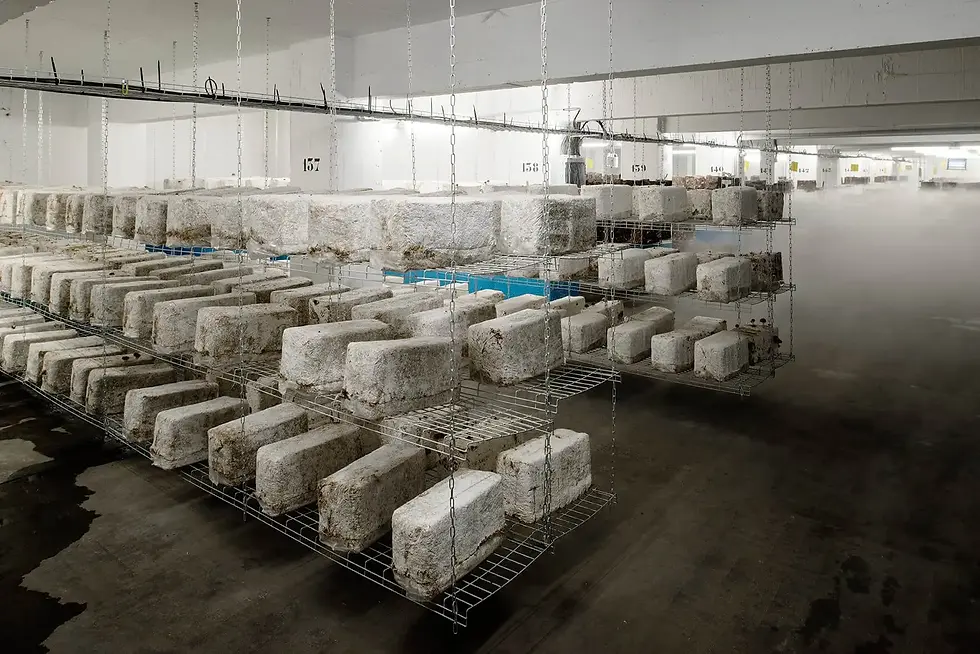
The conditions underground make certain types of farming not only possible, but efficient. Cool temperatures, high humidity, and low light create an ideal environment for crops like mushrooms and microgreens, which do not rely on sunlight to grow. Rows of oyster, shiitake, and other varieties are cultivated alongside microgreens, herbs, and edible flowers, many of which are distributed locally through short supply chains.
The project is run by Cycloponics, a company focused on transforming underground spaces into productive urban farms. Their broader goal is to bring fresh, organic food closer to city residents while creating local jobs and reducing the environmental impact of food distribution. They also have locations around France, in Lyon and Bordeaux, expanding the mission.

What stands out at La Caverne is its systems-based approach. Different elements of production are designed to work together in a circular model. In partnership with Aura, the farm integrates fish into its ecosystem. Waste produced by the fish is used to fertilize crops, creating a closed-loop system that reduces external inputs and minimizes waste. Controlled irrigation and carefully managed growing conditions allow the farm to operate efficiently while maintaining consistent output.
In addition to fresh produce, La Caverne is also developing their own products on-site. One example is its house-made tempeh, a plant-based protein made from soybeans and mushrooms. This reflects a broader goal to move beyond just cultivation and into food production, expanding how urban farms contribute to local food systems.
While the farm already supplies a number of restaurants, there are ongoing efforts to expand access to its products. A key focus is reaching cafeterias and more everyday food services, with the aim of making locally grown, sustainable food available to a wider audience.

Projects like La Caverne point to a larger shift in how cities think about space. Instead of building outward, there is growing interest in adapting what already exists, especially in ways that address sustainability, resource use, and local food production.
La Caverne shows that even the most overlooked parts of a city can be reworked into something functional, productive, and relevant to how cities operate today. If you are interested in learning more about their work, visiting the farm, or exploring potential partnerships, you can visit the official La Caverne website: La Caverne official website.
At Flavors of Paris, projects like La Caverne are exactly the kinds of initiatives we look for. Our food and wine tours highlight small, local producers who are shaping a more sustainable and seasonal approach to eating in Paris. Through this, we aim to offer a more authentic and ever-evolving experience of the city’s food culture. Click down below to learn more about our offerings and book a tour with us!


Comments